
Biomaterial-Based Delivery of Bioactive Compounds for Psoriasis Management: Natural Products, Polymeric Systems, and Emerging Therapeutic Strategies
Abstract
Psoriasis is a chronic immune-mediated inflammatory skin disorder characterized by abnormal Keratinocyte proliferation, persistent inflammation, oxidative stress, and disruption of the skin barrier. Although conventional topical and systemic therapies can effectively control disease activity, their clinical use may be limited by adverse effects, inadequate skin penetration, systemic exposure, and incomplete long-term disease control. Bioactive compounds derived from natural sources have attracted considerable interest because of their anti-inflammatory, antioxidant, immunomodulatory, and antiproliferative activities. However, poor aqueous solubility, chemical instability, low bioavailability, and limited penetration into diseased skin frequently restrict their therapeutic application. Biomaterial-based delivery systems provide opportunities to overcome these limitations by improving compound stability, skin retention, controlled release, and localized delivery. This review summarizes the therapeutic potential of natural bioactive compounds for psoriasis and discusses the role of polymeric biomaterials, hydrogels, nanoparticles, nanostructured carriers, and stimuli-responsive systems in their topical delivery. Particular attention is given to the relationship between biomaterial properties and the pathological characteristics of psoriatic skin, as well as preclinical and emerging clinical evidence. Current challenges related to safety, reproducibility, scalability, regulatory requirements, and clinical translation are also discussed. Finally, emerging strategies involving multifunctional, biomimetic, personalized, and intelligent delivery platforms are highlighted as potential directions for future psoriasis therapy.
Keywords:PsoriasisBioactive compoundsBiomaterialsHydrogelsNanocarriersStimuli-responsive systemsDrug delivery
1. Introduction
Psoriasis is a chronic, immune-mediated inflammatory skin disorder characterized by persistent cutaneous inflammation, excessive proliferation and abnormal differentiation of Keratinocytes, and complex interactions between innate and adaptive immune responses. Although psoriasis is primarily recognized by its characteristic erythematous, scaly, and well-demarcated skin plaques, it is increasingly regarded as a systemic inflammatory disease rather than an isolated disorder of the skin. The disease can substantially affect physical functioning, quality of life, sleep, and psychological well-being, while patients with moderate-to-severe disease may also experience a higher burden of systemic comorbidities. Psoriatic arthritis, metabolic abnormalities, cardiovascular diseases, and other inflammatory conditions have been associated with psoriasis, highlighting the importance of therapeutic strategies that can effectively control cutaneous inflammation while minimizing treatment-related complications [1–4]. The multifactorial nature of psoriasis, involving genetic susceptibility, immune dysregulation, environmental factors, and alterations in epidermal and immune cell function, makes its long-term management particularly challenging [5].
The pathogenesis of psoriasis involves a highly interconnected network of immune and inflammatory mechanisms in which dendritic cells, T lymphocytes, Keratinocytes, neutrophils, and other immune populations contribute to the establishment and maintenance of chronic inflammation. Among the molecular pathways implicated in psoriasis, the Interleukin (IL)-23/IL-17 axis has emerged as a central regulatory pathway. Activation of dendritic cells and subsequent stimulation of T helper 17 (Th17) cells can promote the production of IL-17A, IL-17F, and related inflammatory mediators, which act on Keratinocytes and stimulate the expression of chemokines, cytokines, antimicrobial peptides, and other inflammatory factors. Tumor Necrosis Factor-α (TNF-α), Nuclear Factor-Kappa B (NF-κB), Mitogen-Activated Protein Kinase (MAPK), Janus Kinase/Signal Transducer and Activator of Transcription (JAK/STAT), and oxidative-stress-associated pathways are also involved in the amplification and persistence of psoriatic inflammation. The reciprocal communication between immune cells and Keratinocytes contributes to a self-reinforcing inflammatory microenvironment, resulting in epidermal hyperplasia, abnormal differentiation, angiogenesis, and recruitment of additional inflammatory cells. This complex pathophysiology provides multiple potential molecular targets for therapeutic intervention [6–11].
The clinical management of psoriasis has evolved considerably over the past decades and currently includes topical therapies, phototherapy, conventional systemic agents, targeted small-molecule drugs, and biologic therapies. Topical treatment remains an important component of psoriasis management, particularly for localized and mild-to-moderate disease. Corticosteroids, vitamin D analogues, retinoids, calcineurin inhibitors, keratolytic agents, and other topical medications can reduce inflammation, normalize Keratinocyte proliferation, or improve epidermal differentiation. However, the effectiveness of topical therapy is frequently influenced by the physical properties of the stratum corneum, which represents the primary barrier to the penetration of exogenous substances into the skin. In addition, conventional formulations may exhibit limited residence time at the treatment site, inadequate drug deposition, rapid removal by washing or friction, instability of active compounds, and difficulties in maintaining an effective local concentration. Prolonged or inappropriate use of some topical agents may also cause adverse effects, emphasizing the need for delivery systems that can enhance therapeutic efficacy while reducing unnecessary exposure [12].
Systemic therapies and biologic agents have significantly expanded the treatment options available for patients with moderate-to-severe psoriasis. Agents targeting TNF-α, IL-17, IL-23, and related inflammatory pathways can substantially reduce disease activity in many patients. Nevertheless, systemic treatment may be accompanied by limitations related to cost, long-term administration, immunological effects, treatment discontinuation, patient variability, and the potential development of inadequate or lost therapeutic responses. Furthermore, systemic administration distributes therapeutic agents throughout the body even when the primary pathological manifestations are localized to the skin. These considerations have encouraged researchers to investigate localized and targeted therapeutic approaches capable of delivering active compounds directly to psoriatic lesions while improving drug retention and minimizing systemic exposure [13–16].
In parallel with advances in conventional pharmacotherapy, increasing attention has been directed toward naturally derived and biologically active compounds as potential therapeutic agents for inflammatory skin diseases. Plants, microorganisms, marine organisms, and other biological sources contain diverse classes of compounds with pharmacological properties that may be relevant to psoriasis. Polyphenols, flavonoids, phenolic acids, terpenoids, alkaloids, polysaccharides, peptides, essential-oil constituents, and other natural products have been investigated for their antioxidant, anti-inflammatory, immunomodulatory, antimicrobial, antiproliferative, and tissue-repairing activities. Several naturally derived compounds have demonstrated the ability to modulate signaling pathways associated with psoriasis, including NF-κB, MAPK, JAK/STAT, PI3K/Akt, oxidative-stress-related pathways, and the IL-23/IL-17 inflammatory axis. Their multifunctional biological activities make natural products particularly attractive for complex inflammatory diseases in which several molecular and cellular pathways are simultaneously dysregulated [17].
Despite their promising biological activities, many natural and other bioactive compounds face significant pharmaceutical and delivery-related limitations. Poor aqueous solubility, low chemical stability, rapid degradation, oxidation, limited permeability through the skin, unfavorable pharmacokinetic properties, and insufficient localization at the site of inflammation can substantially reduce their therapeutic potential. In particular, the stratum corneum presents a highly selective barrier that restricts the penetration of many hydrophilic and relatively large molecules. Even compounds with strong anti-inflammatory or antioxidant activity may therefore show limited clinical effectiveness when administered using conventional formulations. Consequently, improving the delivery, stability, bioavailability, and local retention of bioactive compounds is an essential step toward translating their biological potential into clinically meaningful anti-psoriatic therapies [18–22].
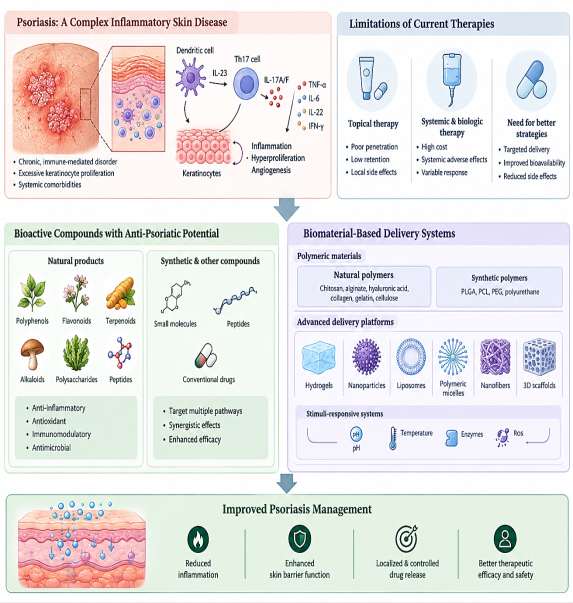
Biomaterial-based drug delivery systems have emerged as an important strategy for addressing these limitations. Biomaterials can be engineered to act not simply as passive carriers but as functional platforms that control drug loading, protect active compounds from degradation, regulate release kinetics, improve tissue interaction, and enhance localization at the target site. In psoriasis, biomaterial-based systems can be designed for topical or transdermal administration to increase deposition of therapeutic compounds within relevant skin layers while limiting unnecessary systemic exposure. Depending on their composition and architecture, these systems can also provide prolonged residence time, controlled release, improved skin hydration, enhanced penetration, and protection of sensitive bioactive molecules from environmental degradation [21]. Integrating bioactive compounds with advanced biomaterial-based delivery systems provides a promising strategy to overcome the limitations of conventional psoriasis therapies by improving drug stability, localized delivery, controlled release, and therapeutic efficacy (Fig. 1).
Polymeric biomaterials are particularly attractive because their chemical composition, molecular weight, surface characteristics, degradation behavior, mechanical properties, and drug-release profiles can be tailored according to therapeutic requirements. Natural polymers such as chitosan, alginate, hyaluronic acid, collagen, gelatin, cellulose derivatives, and silk-based materials have received considerable attention because of their biocompatibility, biodegradability, and, in some cases, intrinsic biological activities. For example, some natural polymers can contribute to wound healing, moisture retention, antimicrobial activity, or modulation of cellular interactions. Synthetic polymers, including Poly(Lactic-co-Glycolic Acid) (PLGA), Polycaprolactone (PCL), Polyethylene Glycol (PEG), and polyurethane-based materials, provide additional opportunities for controlling degradation, drug loading, particle formation, and release behavior. Hybrid systems that combine natural and synthetic polymers may further integrate biological functionality with improved structural and physicochemical properties [10], [21–26].
Beyond conventional polymeric carriers, several advanced delivery platforms have been investigated for the localized administration of bioactive compounds. Hydrogels provide three-dimensional, water-rich networks that can maintain a moist environment and facilitate sustained release of incorporated compounds. Their tunable crosslinking density, swelling behavior, and surface properties allow researchers to design systems with controlled release and favorable skin compatibility. Nanoparticles, polymeric micelles, nanoemulsions, nanogels, liposomes, and lipid-polymer hybrid systems can improve the apparent solubility and stability of poorly water-soluble compounds while modifying their interaction with the skin barrier. Electrospun nanofibrous systems can provide high surface area and extracellular-matrix-like architectures, whereas three-dimensional and biofabricated systems offer opportunities for more complex spatial organization and multifunctional therapeutic platforms [27].
An emerging direction in this field is the development of stimuli-responsive and disease-responsive biomaterial systems. Psoriatic skin exhibits a distinctive inflammatory microenvironment that may include alterations in pH, Reactive Oxygen Species (ROS), enzymatic activity, cytokine levels, and cellular composition. These pathological characteristics provide opportunities for designing delivery systems capable of responding to specific biological stimuli and releasing their payload in a temporally or spatially controlled manner. For example, systems responsive to ROS, enzymes, pH, temperature, or other microenvironmental signals may provide more localized release than conventional formulations. Such approaches could potentially reduce premature drug release, increase therapeutic concentrations at diseased sites, and improve treatment efficiency. However, the practical translation of these sophisticated systems requires careful evaluation of their stability, reproducibility, toxicity, scalability, and long-term behavior in biological environments [28–30]. Another important aspect of biomaterial-based delivery is the potential to combine multiple therapeutic mechanisms within a single platform. Psoriasis involves inflammatory signaling, oxidative stress, abnormal Keratinocyte proliferation and differentiation, immune-cell recruitment, and disruption of the skin barrier. Therefore, multifunctional delivery systems incorporating combinations of anti-inflammatory, antioxidant, antimicrobial, immunomodulatory, or tissue-repairing bioactive compounds may offer advantages over single-component therapies. Similarly, the combination of natural bioactive compounds with conventional anti-psoriatic drugs within a polymeric or nanostructured carrier may provide opportunities for synergistic or complementary effects. Nevertheless, claims of synergy require rigorous experimental validation, and the interactions between carrier materials, active compounds, skin cells, and the inflammatory microenvironment must be carefully characterized [31].
Designing biomaterial-based systems for psoriasis also requires consideration of the unique characteristics of diseased skin. Changes in epidermal thickness, barrier integrity, lipid composition, hydration, vascularization, and inflammatory status can influence drug penetration and retention. Consequently, delivery systems developed using healthy skin models may not necessarily exhibit the same behavior in psoriatic lesions. Selecting appropriate in vitro, ex vivo, and in vivo models is therefore critical for evaluating skin penetration, cellular uptake, pharmacological activity, irritation, sensitization, and therapeutic efficacy. Furthermore, although numerous bioactive compounds have demonstrated promising results in cell-based and animal studies, the evidence supporting their clinical effectiveness in psoriasis remains variable. Differences in compound composition, extraction methods, dosage, formulation, experimental models, and outcome measures can make direct comparison between studies difficult [29–32].
From a translational perspective, several challenges remain before bioactive-compound-loaded biomaterials can be widely incorporated into psoriasis therapy. These include improving batch-to-batch consistency of natural products, establishing reliable quality-control methods, optimizing drug loading and release, determining long-term stability, minimizing carrier-associated toxicity, ensuring reproducible skin penetration, and developing scalable manufacturing processes. Regulatory considerations are also important, particularly for multifunctional systems containing combinations of natural compounds, polymers, nanoparticles, and conventional drugs. Comprehensive evaluation of pharmacokinetics, local and systemic safety, immunogenicity, degradation products, and long-term tissue responses will be necessary to support clinical translation.
Against this background, biomaterial-based delivery of bioactive compounds represents a rapidly developing research area at the intersection of natural-product chemistry, pharmaceutical technology, biomaterials science, dermatology, and tissue engineering. Integrating the biological properties of naturally derived compounds with the tunable physicochemical characteristics of advanced biomaterials may provide new opportunities for improving the localized treatment of psoriasis. However, the growing number of studies in this field also highlights the need for a systematic understanding of how compound characteristics, biomaterial composition, delivery architecture, skin interactions, and disease-associated mechanisms collectively influence therapeutic outcomes [33].
Therefore, this review provides a comprehensive assessment of biomaterial-based delivery of bioactive compounds for psoriasis management, with particular emphasis on natural products, polymeric systems, advanced topical and nanostructured delivery platforms, and emerging therapeutic strategies. First, the pathological mechanisms and therapeutic targets associated with psoriasis are discussed to establish the biological basis for biomaterial-assisted treatment. The major classes of bioactive compounds with reported anti-psoriatic potential are then examined, followed by an analysis of the natural and synthetic polymeric materials used to deliver them. Particular attention is given to hydrogels, nanoparticles, nanogels, liposomes, polymeric micelles, electrospun systems, and stimuli-responsive platforms. Finally, current preclinical and clinical evidence, formulation and translational challenges, safety considerations, and future opportunities for developing multifunctional and disease-responsive delivery systems are critically discussed. Through this integrated perspective, the review aims to clarify the current state of the field and identify promising directions for developing more effective, localized, and biologically informed therapeutic strategies for psoriasis [34].
2. Pathogenesis and Molecular Mechanisms of Psoriasis
Psoriasis is a multifactorial inflammatory skin disease in which genetic susceptibility, environmental triggers, immune dysregulation, and abnormal Keratinocyte activity interact to produce persistent cutaneous inflammation. Rather than being driven by a single pathological mechanism, psoriasis involves a complex communication network between innate and adaptive immune cells, Keratinocytes, vascular cells, and inflammatory mediators. In genetically susceptible individuals, environmental factors such as infections, physical trauma, psychological stress, smoking, and certain medications may contribute to the initiation or exacerbation of disease. These factors can activate innate immune responses and subsequently stimulate adaptive immunity, leading to persistent inflammation and characteristic psoriatic lesions [10], [21–28]. The interaction between dendritic cells and T lymphocytes represents a central component of psoriasis pathogenesis. Following activation, dendritic cells produce inflammatory cytokines, particularly Interleukin (IL)-23, which promotes the differentiation, expansion, and maintenance of Th17 cells. Th17 cells subsequently release IL-17A, IL-17F, and other inflammatory mediators that act on Keratinocytes. Activated Keratinocytes produce chemokines, cytokines, antimicrobial peptides, and growth-related factors that promote further recruitment and activation of immune cells. This reciprocal interaction between immune cells and Keratinocytes establishes a self-amplifying inflammatory loop that contributes to the persistence of psoriatic lesions.
The IL-23/IL-17 axis is therefore considered one of the major molecular pathways involved in psoriasis. IL-23 supports the survival and activity of pathogenic Th17 cells, whereas IL-17 family cytokines directly influence Keratinocyte behavior and inflammatory mediator production. TNF-α further amplifies this response by stimulating inflammatory signaling in both immune and epidermal cells. The interaction between TNF-α and the IL-23/IL-17 pathway illustrates the interconnected nature of psoriatic inflammation and explains why targeting specific cytokine pathways has become an important strategy in modern psoriasis therapy.
Several intracellular signaling pathways participate in the regulation of these inflammatory processes. Activation of NF-κB promotes the transcription of numerous pro-inflammatory genes and contributes to sustained cytokine production. MAPK pathways, including Extracellular Signal-Regulated Kinase (ERK), c-Jun N-terminal Kinase (JNK), and p38, are involved in cellular proliferation, inflammatory responses, and stress signaling. Similarly, the JAK/STAT pathway mediates signaling from several cytokine receptors and plays an important role in immune-cell activation and Keratinocyte responses. These interconnected signaling pathways provide multiple molecular targets through which bioactive compounds may exert anti-inflammatory and immunomodulatory effects [33–36]. The major cellular and molecular interactions underlying psoriasis pathogenesis are schematically illustrated in Fig. 2, while the major molecular and cellular mechanisms involved in psoriasis are summarized in Table 1.
Oxidative stress is another important component of psoriasis-associated inflammation. Increased production of ROS and an imbalance between oxidant generation and endogenous antioxidant defenses can promote cellular damage and inflammatory signaling. ROS may interact with several inflammatory pathways, including NF-κB and MAPK signaling, creating a feedback mechanism that contributes to persistent inflammation. This relationship provides a biological rationale for investigating antioxidant bioactive compounds, particularly plant-derived polyphenols and flavonoids, as potential complementary therapeutic agents for psoriasis.
Abnormal Keratinocyte proliferation and differentiation represent important downstream consequences of persistent inflammation. Under physiological conditions, Keratinocytes undergo a highly regulated differentiation process that maintains epidermal homeostasis. In psoriatic skin, inflammatory cytokines and growth-related signals alter this process, resulting in accelerated Keratinocyte proliferation, incomplete differentiation, and epidermal hyperplasia. Increased vascularization and infiltration of inflammatory cells further contribute to the formation and maintenance of psoriatic plaques. Consequently, effective therapeutic strategies may need to address not only inflammation but also the abnormal cellular and structural changes occurring within the epidermis [37].
The skin barrier itself is also an important component of psoriasis pathogenesis and therapeutic response. Alterations in epidermal differentiation, intercellular lipids, structural proteins, and barrier-associated molecules can compromise normal skin homeostasis. Barrier dysfunction may increase susceptibility to environmental stimuli and influence the penetration, retention, and distribution of topical therapeutic compounds. This aspect is particularly relevant to biomaterial-based delivery systems because the pathological characteristics of psoriatic skin can affect drug diffusion and interactions between delivery vehicles and epidermal cells. Therefore, understanding the altered skin microenvironment is essential for designing delivery systems capable of achieving appropriate localization and controlled release [31–37].
The complex pathogenesis of psoriasis also highlights the potential value of multifunctional therapeutic strategies. Because inflammation, oxidative stress, abnormal Keratinocyte activity, and barrier dysfunction are closely interconnected, compounds capable of simultaneously modulating several of these processes may offer advantages over agents directed toward a single mechanism. Natural bioactive compounds are of particular interest in this context because many exhibit combinations of anti-inflammatory, antioxidant, antimicrobial, immunomodulatory, and tissue-repairing activities. However, their therapeutic effectiveness depends not only on their intrinsic biological activity but also on their stability, solubility, skin penetration, and local residence time. These factors provide a direct rationale for combining bioactive compounds with advanced biomaterial-based delivery systems.
This figure is shown in the PDF version of the article.
Table 1. Major molecular and cellular mechanisms involved in psoriasis.
This table is shown in the PDF version of the article.
Collectively, these mechanisms demonstrate that psoriasis is characterized by interconnected inflammatory, oxidative, cellular, and barrier-related abnormalities rather than a single pathological defect. This complexity creates opportunities for bioactive compounds that can influence multiple molecular pathways while also emphasizing the importance of effective delivery to the affected skin. Accordingly, the following section focuses on major classes of bioactive compounds with reported anti-psoriatic properties and their potential mechanisms of action.
3. Bioactive Compounds with Anti-Psoriatic Potential
Bioactive compounds have attracted considerable interest as potential therapeutic agents for psoriasis because they can modulate multiple biological processes involved in chronic cutaneous inflammation. Unlike agents that primarily act on a single molecular target, many bioactive compounds can simultaneously influence inflammatory signaling, oxidative stress, Keratinocyte proliferation, immune-cell activity, and epidermal barrier function. This multifunctional behavior is particularly relevant to psoriasis, where several interconnected pathways contribute to disease initiation and persistence. Bioactive compounds investigated for anti-psoriatic applications include polyphenols, flavonoids, phenolic acids, terpenoids, alkaloids, polysaccharides, peptides, and other naturally or biologically derived molecules [21].
Polyphenols and flavonoids represent some of the most extensively investigated classes of bioactive compounds for inflammatory skin disorders. The major classes of bioactive compounds investigated for psoriasis management, together with representative compounds, potential anti-psoriatic activities, and key delivery considerations, are summarized in Table 2. Compounds such as curcumin, resveratrol, quercetin, Epigallocatechin Gallate (EGCG), and related phenolic molecules have demonstrated anti-inflammatory and antioxidant activities in various experimental models. Their reported effects include modulation of NF-κB and MAPK signaling, reduction of pro-inflammatory cytokine production, regulation of oxidative stress, and suppression of abnormal Keratinocyte responses. These compounds may therefore influence several pathological processes simultaneously, although their therapeutic effects can vary substantially depending on concentration, formulation, experimental model, and route of administration [25].
Terpenoids and other plant-derived secondary metabolites have also been investigated because of their potential effects on inflammatory and oxidative pathways. Certain terpenoid compounds may regulate cytokine production, cellular proliferation, and oxidative-stress responses, while some essential-oil constituents have demonstrated antimicrobial or anti-inflammatory properties. Alkaloids and other specialized metabolites can similarly interact with signaling pathways involved in immune regulation and cellular responses. However, the biological activity of these compounds is often strongly dependent on their chemical structure and dose, and compounds obtained from complex natural sources may show considerable variability in composition.
Polysaccharides and biologically derived macromolecules provide an additional group of potentially useful bioactive agents. Certain polysaccharides, peptides, and protein-derived molecules have demonstrated immunomodulatory, antioxidant, antimicrobial, or tissue-repairing properties that may be relevant to psoriasis management. Their relatively large molecular size, however, can restrict passive penetration through the stratum corneum. This limitation makes them particularly suitable candidates for incorporation into delivery systems capable of improving local retention, protecting the active molecule, or facilitating controlled transport across the skin barrier [10], [21–29].
An important feature of many bioactive compounds is their potential to act on several interconnected mechanisms rather than a single pathway. For example, a compound with both antioxidant and anti-inflammatory activity may reduce oxidative stress while simultaneously attenuating NF-κB or MAPK-associated inflammatory signaling. Similarly, compounds capable of modulating Keratinocyte proliferation and inflammatory cytokine production may address both epidermal abnormalities and the underlying inflammatory environment. Such multifunctionality provides a strong rationale for investigating bioactive compounds as complementary or alternative components of localized psoriasis therapy.
Despite these promising properties, biological activity alone does not guarantee effective therapeutic performance. Many bioactive compounds exhibit poor aqueous solubility, chemical instability, rapid degradation, limited skin permeability, or low local residence time. These limitations are particularly important for topical administration because the stratum corneum restricts the movement of many molecules into deeper skin layers. In addition, some compounds may undergo oxidation or photodegradation during storage or after application, resulting in reduced activity. Consequently, the pharmaceutical performance of a bioactive compound must be considered together with its physicochemical characteristics and delivery requirements [23].
Combining bioactive compounds with biomaterial-based delivery systems can help address several of these limitations. Polymeric carriers, hydrogels, nanoparticles, nanogels, liposomes, and other advanced platforms can improve the apparent solubility and stability of poorly water-soluble compounds, protect sensitive molecules from degradation, and provide sustained or controlled release. Such systems may also increase drug deposition within the epidermis or upper dermis and prolong contact with psoriatic lesions. Therefore, the therapeutic potential of a bioactive compound should be evaluated not only according to its intrinsic pharmacological activity but also according to its compatibility with an appropriate delivery platform.
The selection of bioactive compounds for biomaterial-assisted psoriasis therapy should consequently consider several factors, including molecular size, polarity, solubility, stability, biological target, required therapeutic concentration, skin permeability, and potential toxicity. Compounds with complementary mechanisms may also be incorporated into multifunctional systems; however, potential synergistic effects should be established experimentally rather than assumed. The growing body of evidence supports the investigation of bioactive compounds as promising components of localized psoriasis treatment, while emphasizing the need for optimized delivery systems to translate their biological activity into reproducible therapeutic outcomes [23]. Phenolic acids Caffeic acid, ferulic acid Antioxidant and inflammatory Stability and skin pathway modulation penetration Terpenoids Selected terpenes and Anti-inflammatory, antioxidant, Variable solubility and triterpenes immunomodulatory effects volatility Alkaloids Selected plant-derived Modulation of inflammatory and Potential toxicity and alkaloids cellular pathways dose dependence Polysaccharides Plant- and marine- Immunomodulatory, antioxidant, Large molecular size derived polysaccharides barrier-supporting effects and limited penetration Peptides and Bioactive peptides Immunomodulatory, antimicrobial, Stability and enzymatic proteins tissue-repairing effects degradation Essential-oil Selected terpenes and Anti-inflammatory and Volatility, irritation, and constituents phenylpropanoids antimicrobial effects formulation stability
Table 2. Major classes of bioactive compounds investigated for psoriasis management.
This table is shown in the PDF version of the article.
Taken together, these bioactive compounds provide a diverse molecular reservoir for developing new approaches to psoriasis management. Their major advantage lies in their potential to influence multiple pathological processes, whereas their principal limitation is the difficulty of achieving sufficient and sustained concentrations at the target skin site. This balance between biological potential and delivery limitations provides the basis for combining natural and biologically derived compounds with polymeric and nanostructured biomaterials, which are discussed in the following sections.
4. Natural Products and Plant-Derived Compounds
Natural products represent an important source of bioactive molecules with potential applications in psoriasis management. Plants, marine organisms, microorganisms, and other biological sources contain structurally diverse compounds capable of influencing inflammatory, oxidative, immune, and cellular processes involved in psoriasis. Among these sources, medicinal plants and plant-derived compounds have received particular attention because of their chemical diversity and the presence of polyphenols, flavonoids, phenolic acids, terpenoids, alkaloids, polysaccharides, and other secondary metabolites. Many of these compounds exhibit multiple biological activities, including anti-inflammatory, antioxidant, antimicrobial, immunomodulatory, and tissue-repairing effects, making them potentially suitable for multifunctional management of inflammatory skin disorders [38].
Polyphenolic compounds are among the most frequently investigated plant-derived agents for psoriasis. Curcumin, a major bioactive constituent of Curcuma Longa, has attracted substantial interest because of its reported ability to modulate inflammatory signaling and oxidative stress. Its biological effects have been associated with pathways such as NF-κB, MAPK, and other regulators of inflammatory mediator production. Resveratrol, a stilbene polyphenol found in several plant sources, has also been investigated for its antioxidant and anti-inflammatory properties and its potential effects on abnormal cellular proliferation. Quercetin, a widely distributed flavonoid, may similarly influence inflammatory signaling, oxidative stress, and cytokine production. These compounds illustrate the potential of plant-derived molecules to act on several pathological mechanisms simultaneously. Representative natural and plant-derived compounds investigated for psoriasis management, together with their major sources, biological activities, and key limitations, are summarized in
Table 3.
This table is shown in the PDF version of the article.
Tea-derived polyphenols, particularly EGCG, have also been investigated in inflammatory skin conditions. EGCG possesses antioxidant and anti-inflammatory properties and has been associated with modulation of signaling pathways involved in inflammatory responses and cellular proliferation. Other flavonoids and phenolic acids, including kaempferol, apigenin, luteolin, caffeic acid, and ferulic acid, have demonstrated biological activities that may be relevant to psoriasis. Their effects can involve regulation of inflammatory mediators, reduction of oxidative stress, and modulation of Keratinocyte-associated responses. However, the strength of evidence varies among individual compounds, and findings from in vitro and animal studies cannot always be directly translated into clinical effectiveness [39–41].
Terpenoids and triterpenoid compounds provide another important group of plant-derived bioactives. These compounds can exhibit anti-inflammatory, antioxidant, and immunomodulatory properties and may influence several signaling pathways involved in cutaneous inflammation. Certain essential-oil constituents have additionally demonstrated antimicrobial and anti-inflammatory activities, which may be relevant to maintaining skin homeostasis. Nevertheless, essential oils and highly concentrated plant extracts require careful formulation because volatility, chemical instability, skin irritation, and variable composition can affect their therapeutic performance and safety.
Plant-derived polysaccharides and other macromolecular compounds have also gained attention because of their potential immunomodulatory, antioxidant, moisturizing, and barrier-supporting properties. Unlike many small phenolic molecules, however, their relatively large molecular size can limit passive penetration through the stratum corneum. This characteristic highlights an important distinction between biological activity and effective topical delivery. A compound may demonstrate substantial activity in a cellular model while showing limited efficacy after topical administration because only a small fraction reaches the relevant skin compartment. Accordingly, formulation and delivery strategies are particularly important for translating the potential of natural macromolecules into practical therapies [42].
Despite their promising pharmacological properties, natural products present several challenges that can limit their clinical application. Plant-derived compounds may exhibit poor aqueous solubility, low chemical stability, rapid oxidation, photodegradation, limited skin permeability, and short residence times at the application site. In addition, the composition of botanical extracts can vary according to plant species, geographical origin, cultivation conditions, harvesting time, extraction method, and storage conditions. Such variability can influence both biological activity and reproducibility. Standardizing extracts and establishing appropriate quality-control procedures are therefore essential for reliable development of natural-product-based therapeutic formulations.
Another important consideration is that the biological activity of a crude extract cannot necessarily be attributed to a single constituent. Multiple compounds may contribute to the observed pharmacological effect, and interactions between constituents may produce additive, complementary, or antagonistic responses. Therefore, characterizing the chemical composition, identifying active constituents, and evaluating dose-response relationships are important steps in developing reproducible natural-product formulations. Safety assessment is equally important because natural origin does not inherently guarantee the absence of toxicity, irritation, sensitization, or interactions with other therapeutic agents [43].
Biomaterial-based delivery systems provide an opportunity to overcome several of these limitations. Encapsulation of poorly soluble plant-derived compounds within polymeric nanoparticles, nanogels, liposomes, nanoemulsions, or hydrogel matrices can improve their apparent solubility and protect them from degradation. Such systems may also prolong residence time on psoriatic skin and provide controlled release of the incorporated compounds. The combination of natural bioactives with biomaterials is therefore not simply a strategy for improving formulation stability but can also be used to optimize local drug deposition and regulate the temporal profile of therapeutic exposure.
The growing interest in natural products should consequently be accompanied by a shift from evaluating isolated biological activity toward integrated assessment of compound formulation skin interactions. Factors such as physicochemical properties, skin penetration, local retention, release kinetics, biological activity, and safety should be considered together. This approach is particularly important for psoriasis, where alterations in epidermal structure and barrier function may modify the behavior of topical formulations. Natural and plant-derived compounds provide a valuable source of potential anti-psoriatic agents, but their successful development increasingly depends on the use of suitable biomaterial platforms capable of improving stability, localization, and controlled delivery.
Collectively, natural products provide a broad reservoir of compounds with potentially complementary activities against the inflammatory and oxidative abnormalities associated with psoriasis. However, their therapeutic translation requires reproducible composition, appropriate safety evaluation, and delivery systems capable of overcoming physicochemical and skin-barrier limitations. These considerations provide the basis for the next section, which focuses on polymeric biomaterials as platforms for topical delivery of bioactive compounds.
5. Polymeric Biomaterials for Topical Delivery
Polymeric biomaterials have emerged as versatile platforms for the topical delivery of bioactive compounds because their physicochemical and structural properties can be tailored according to the characteristics of the therapeutic payload and the requirements of diseased skin. By modifying polymer composition, molecular weight, crosslinking density, surface characteristics, and degradation behavior, polymeric systems can be designed to improve drug loading, protect sensitive compounds, prolong residence time, and regulate release at the application site. These properties are particularly relevant to psoriasis, where the altered epidermal structure and impaired barrier function can influence the penetration and distribution of topical therapeutic agents [40].
Natural polymers have received considerable attention because of their biocompatibility, biodegradability, and generally favorable interactions with biological tissues. Chitosan, alginate, hyaluronic acid, gelatin, collagen, cellulose derivatives, and silk-based materials are among the polymers investigated for pharmaceutical and biomedical applications. In addition to serving as carriers, some natural polymers may provide complementary functions such as moisture retention, film formation, wound healing, antimicrobial activity, or support of tissue repair. Chitosan, for example, possesses mucoadhesive and antimicrobial characteristics, while hyaluronic acid can contribute to hydration and favorable interactions with the skin. These properties make natural polymers attractive components of topical formulations containing anti-inflammatory or antioxidant bioactive compounds.
Synthetic polymers provide additional opportunities for controlling the physicochemical properties and performance of delivery systems. PLGA, PCL, PEG, and polyurethane-based materials can be engineered to control particle formation, drug encapsulation, degradation, and release behavior. Their composition can be adjusted to achieve specific release profiles and improve the stability of incorporated compounds. Synthetic polymers may therefore be particularly useful when precise control over drug delivery is required. However, their suitability for topical psoriasis applications depends on factors such as polymer composition, degradation products, surface properties, and local tissue compatibility.
Polymer-based systems can be formulated in several physical architectures depending on the desired therapeutic function. Polymeric films and coatings can increase contact between the active compound and the skin surface, whereas polymeric nanoparticles and nanogels can improve the dispersion and apparent solubility of poorly water-soluble compounds. Hydrogels provide hydrated three-dimensional networks that can maintain a moist environment and facilitate sustained release. Polymeric micelles can incorporate hydrophobic molecules within their internal domains, potentially improving the topical administration of poorly soluble bioactives. The selection of a particular architecture should therefore be based on the physicochemical properties of the active compound and the intended site and duration of action [37–40]. An important advantage of polymeric biomaterials is their ability to regulate the release of incorporated compounds. Drug release may occur through diffusion, polymer swelling, matrix degradation, or a combination of these mechanisms. By controlling polymer concentration, molecular weight, crosslinking density, particle size, and other structural parameters, the release profile can be adjusted to reduce rapid loss of the therapeutic agent from the skin surface. Sustained local release may be particularly useful for chronic inflammatory diseases such as psoriasis because prolonged exposure can potentially reduce the frequency of administration while maintaining therapeutic concentrations within the target tissue [36].
Polymeric biomaterials may also improve the stability of natural bioactive compounds. Many plant-derived molecules are sensitive to oxidation, light, temperature, or hydrolysis and may therefore lose activity during storage or after topical application. Encapsulation within a polymeric matrix can provide a protective microenvironment and reduce direct exposure to external factors. In addition, polymeric carriers can modify the interaction between the active compound and the skin barrier, potentially improving local deposition. Nevertheless, increased penetration is not always desirable; the optimal delivery system should provide sufficient localization within the relevant skin layers while minimizing unnecessary systemic absorption [34]. The combination of natural and synthetic polymers has generated increasing interest because hybrid systems can integrate the biological advantages of natural materials with the tunable physicochemical properties of synthetic polymers. For example, a natural polymer may contribute hydration, biocompatibility, or biological functionality, whereas a synthetic component can improve mechanical stability, degradation control, or drug-release characteristics. Such combinations can be particularly useful for developing multifunctional topical systems in which several performance requirements must be satisfied simultaneously.
The interaction between polymeric materials and psoriatic skin should also be carefully considered. Psoriatic lesions may exhibit increased epidermal thickness, altered lipid composition, changes in hydration, inflammation, and disruption of barrier-associated structures. These characteristics can influence polymer adhesion, swelling, degradation, and drug diffusion. Consequently, delivery systems optimized using healthy skin models may not behave identically in diseased tissue. Evaluation using relevant psoriasis models is therefore important for determining whether a polymeric formulation provides appropriate localization, release, penetration, and biological activity.
Safety and formulation compatibility are equally important considerations. Although many polymers have established biomedical applications, their safety depends on factors including molecular weight, concentration, residual reagents, degradation products, particle characteristics, and route of administration. For nanostructured polymeric systems, particle size and surface properties may additionally influence cellular uptake and local inflammatory responses [39]. The potential for irritation, sensitization, or unwanted systemic exposure should therefore be assessed alongside therapeutic efficacy. The major natural and synthetic polymers used or investigated as platforms for topical delivery, together with their principal characteristics and potential roles in psoriasis-oriented formulations, are summarized in Table 4.
Table 4. Natural and synthetic polymeric biomaterials investigated for topical delivery of bioactive compounds in psoriasis management.
This table is shown in the PDF version of the article.
Polymeric biomaterials provide a flexible foundation for improving bioactive compound delivery to psoriatic skin. Their ability to regulate drug loading, protection, residence time, and release makes them particularly suitable for compounds whose therapeutic potential is limited by poor stability or unfavorable physicochemical properties. However, the optimal polymeric system depends on the characteristics of both the therapeutic compound and the pathological skin environment. These considerations have encouraged the development of more sophisticated hydrogel and nanostructured platforms, which are discussed in the following section.
6. Hydrogels and Nanostructured Delivery Systems
Hydrogels and nanostructured delivery systems have emerged as important approaches for improving the topical administration of bioactive compounds in psoriasis. These platforms can address several limitations associated with conventional formulations, including poor aqueous solubility, rapid degradation, limited residence time, and inadequate localization within the skin. Their structural and physicochemical properties can be tailored to control drug loading, release, hydration, and interactions with the skin. Consequently, these systems provide opportunities to improve the local availability of bioactive compounds while potentially reducing unnecessary systemic exposure [31].
Hydrogels are three-dimensional polymeric networks capable of retaining substantial amounts of water or biological fluids. Their high-water content and soft structure can provide favorable conditions for topical application, particularly on inflamed and dry psoriatic skin. Hydrogels can maintain close contact with the skin surface and provide a reservoir from which incorporated compounds are released gradually. Depending on the polymer composition and crosslinking strategy, their swelling, mechanical properties, degradation, and release behavior can be adjusted according to the intended therapeutic application.
Natural polymers such as chitosan, alginate, hyaluronic acid, gelatin, and cellulose derivatives are frequently considered for hydrogel development because of their biocompatibility and hydration-related properties. Synthetic polymers can provide additional control over mechanical strength, degradation, and release kinetics. Hybrid hydrogels combining natural and synthetic components may therefore provide a balance between biological compatibility and structural tunability. For psoriasis applications, hydrogel formulations may be particularly useful for incorporating poorly soluble natural compounds and maintaining prolonged contact between the therapeutic payload and the affected skin.
The release of bioactive compounds from hydrogels can occur through diffusion, swelling, polymer relaxation, degradation, or combinations of these mechanisms. Crosslinking density is an important parameter because highly crosslinked networks generally restrict molecular diffusion, whereas less densely crosslinked structures may permit faster release. Other factors, including polymer concentration, molecular weight, mesh size, compound–polymer interactions, and environmental conditions, can also influence release behavior. Appropriate control of these parameters may help maintain therapeutic concentrations over an extended period and reduce the need for frequent topical application [29–33].
Nanostructured systems provide another strategy for improving the delivery of bioactive compounds. Polymeric nanoparticles, nanogels, liposomes, polymeric micelles, nanoemulsions, and lipid–polymer hybrid nanoparticles can modify the solubility, stability, distribution, and skin interaction of incorporated compounds. Their small dimensions and high surface-to-volume ratios can facilitate intimate contact with the skin and may improve the deposition of active molecules within relevant epidermal or dermal compartments. However, nanoscale dimensions alone do not guarantee enhanced penetration, and the behavior of each system depends on its composition, surface properties, particle size, physicochemical characteristics, and interaction with the skin barrier.
Polymeric nanoparticles can encapsulate hydrophobic or hydrophilic compounds depending on the polymer and formulation strategy. Encapsulation may protect sensitive bioactive molecules from oxidation, hydrolysis, or photodegradation while providing controlled release. Nanogels combine nanoscale dimensions with the water-rich characteristics of hydrogels and can therefore provide both high hydration and drug-loading capacity. These properties make nanogels attractive for delivering natural compounds whose therapeutic activity is limited by poor solubility or instability [40].
Liposomes and lipid-based systems have also been investigated for topical delivery because their lipidic structures can interact with the lipid components of the stratum corneum. Liposomes consist of phospholipid bilayers capable of incorporating compounds with different physicochemical characteristics. Depending on their composition and surface properties, they can enhance drug deposition, improve formulation stability, and modify the interaction between the therapeutic compound and the skin. Nanoemulsions can similarly improve the dispersion of poorly water-soluble compounds and provide a suitable vehicle for certain plant-derived molecules and essential-oil constituents.
Polymeric micelles represent another useful platform for hydrophobic bioactive compounds. Their amphiphilic structure allows poorly water-soluble molecules to be incorporated into hydrophobic domains while the hydrophilic components improve dispersion in aqueous environments. This approach can increase the apparent solubility of hydrophobic compounds and facilitate their incorporation into topical formulations. However, micellar stability after application and the ability to maintain sufficient drug concentration at the target site must be carefully evaluated.
Combining different delivery architectures can further enhance the functionality of topical systems [41–45]. For example, nanoparticles can be incorporated into hydrogels to create nanoparticle-loaded hydrogel formulations that combine nanoscale drug carriers with the prolonged residence and hydration properties of hydrogels. Such hybrid systems may provide improved retention on the skin surface, protection of the therapeutic compound, and controlled release. Similarly, liposomes or nanoemulsions can be incorporated into polymeric matrices to regulate their distribution and residence time. These multifunctional architectures are particularly relevant when the active compound requires simultaneous improvement in stability, solubility, and local retention.
The major hydrogel and nanostructured delivery platforms considered for topical administration of bioactive compounds, together with their principal characteristics and potential advantages for psoriasis management, are summarized in Fig. 3 and Table 5.
This figure is shown in the PDF version of the article.
Table 5. Hydrogel and nanostructured delivery systems for topical administration of bioactive compounds in psoriasis management.
This table is shown in the PDF version of the article.
High water content, drug Particle stability and skin loading, improved interaction dispersion Protection, controlled Size, surface properties, release, improved toxicity localization Improved solubilization and Stability and lipid skin interaction composition Solubilization of Micellar stability and drug hydrophobic compounds retention Improved dispersion of Physical stability and skin poorly soluble compounds compatibility
delivery properties scalability Combined controlled release Formulation complexity and prolonged skin and reproducibility residence Lipid–polymer Combined lipid and polymeric Complementary stability and Structural complexity and
Despite their considerable potential, hydrogels and nanostructured systems require careful optimization. Particle size, surface charge, polymer composition, lipid content, crosslinking density, viscosity, and release characteristics can strongly influence their biological performance. In addition, enhanced interaction with the skin should not result in unwanted irritation or excessive systemic absorption. Long-term stability, sterilization where required, reproducibility, scalability, and storage conditions must also be considered during formulation development.
Importantly, the performance of these systems should be evaluated using models that adequately reflect the pathological characteristics of psoriasis. Changes in epidermal thickness, hydration, barrier integrity, and inflammatory status may influence the distribution and retention of delivery systems differently from healthy skin. Therefore, studies using relevant cellular, reconstructed skin, ex vivo, and animal models can provide complementary information regarding penetration, retention, biological activity, and safety [33–36].
Hydrogels and nanostructured delivery systems provide versatile platforms for improving the topical delivery of bioactive compounds. Their ability to combine controlled release, enhanced stability, improved localization, and prolonged residence makes them promising components of biomaterial-assisted psoriasis therapy. The development of systems that can respond specifically to pathological characteristics of psoriatic skin represents a further step toward more precise and efficient treatment strategies, leading to the concept of targeted and stimuli-responsive delivery systems discussed in the following section.
7. Targeted and Stimuli-Responsive Delivery
Targeted and stimuli-responsive delivery systems represent an emerging approach for improving the spatial and temporal control of bioactive compound administration in psoriasis. Conventional topical formulations generally release their active ingredients according to passive diffusion and formulation-dependent processes, without specifically responding to pathological characteristics of the diseased skin. In contrast, targeted delivery systems can be designed to improve localization within affected skin, while stimuli-responsive platforms can modify drug release in response to specific environmental or biological signals. These approaches may improve therapeutic efficiency while reducing premature drug release and unnecessary exposure of healthy tissues [35].
Psoriatic skin exhibits several biological and physicochemical characteristics that may distinguish it from healthy skin. Increased inflammatory activity, altered oxidative status, changes in epidermal structure, modified enzymatic activity, and variations in the local microenvironment can potentially be exploited as triggers for responsive delivery. ROS, pH, temperature, specific enzymes, and inflammatory-associated biological signals have therefore been investigated as potential stimuli for designing disease-responsive biomaterials. The selection of a stimulus should be based on its reproducibility, specificity, intensity within the target tissue, and compatibility with the therapeutic system [30].
ROS-responsive systems are particularly relevant because oxidative stress is an important component of psoriatic inflammation. In such systems, oxidation-sensitive chemical groups or linkages can undergo structural changes in the presence of elevated ROS levels, resulting in enhanced release of the incorporated therapeutic compound. This approach may provide preferential release in an oxidative inflammatory environment compared with tissues exhibiting lower oxidative activity. However, the concentration and spatial distribution of ROS can vary among lesions and disease models, which should be considered when designing and evaluating ROS-responsive formulations.
pH-responsive delivery systems represent another potential strategy. Changes in local pH can influence polymer ionization, swelling, solubility, and degradation, thereby altering the release behavior of incorporated compounds. Polymers containing ionizable functional groups can be designed to undergo changes in their physicochemical properties at selected pH values. Such systems may provide controlled release when exposed to a specific local environment. Nevertheless, the differences in pH between healthy and psoriatic skin may be relatively modest, and therefore pH responsiveness should be carefully optimized to achieve meaningful therapeutic selectivity [21].
Enzyme-responsive systems provide an additional mechanism for disease-associated drug release. Inflammatory skin lesions can exhibit altered activity of certain proteases and other enzymes. Biomaterials can be engineered to contain enzyme-cleavable linkers or structures that undergo degradation in the presence of specific enzymatic activity. This strategy may enable localized release of bioactive compounds in areas where the relevant enzyme is present at elevated levels. The major challenge is achieving sufficient specificity because many enzymes are also present in healthy tissues and may vary according to disease severity and biological model [39–43].
Temperature-responsive systems can provide another level of control over drug release and formulation behavior. Thermoresponsive polymers can undergo reversible changes in solubility, swelling, or phase behavior within a selected temperature range. Such systems can be formulated as liquid preparations that transform into gels after application, thereby increasing residence time and reducing formulation loss. However, the temperature difference between diseased and healthy skin is generally limited, meaning that temperature responsiveness is often more useful for controlling formulation transitions than for highly specific disease targeting [43].
In addition to endogenous biological stimuli, externally applied physical stimuli can potentially be incorporated into advanced delivery strategies. Light, ultrasound, magnetic fields, and other external signals may be used to control drug release or enhance transport under appropriate conditions. These systems provide greater temporal control because the stimulus can be applied when therapeutic activity is desired. However, additional equipment, formulation complexity, safety considerations, and treatment requirements may limit their practical use in routine psoriasis management.
Targeting can also be achieved through physicochemical interactions between delivery systems and the skin. Surface charge, hydrophobicity, particle size, adhesion, and interactions with epidermal components can influence the distribution and retention of carriers. Mucoadhesive or bioadhesive polymers, for example, can prolong contact with the skin surface and reduce removal by washing or mechanical friction. Similarly, surface modification of nanoparticles can alter their interaction with skin cells and extracellular components. These approaches may improve local retention without requiring a specific molecular targeting ligand [34–39]. The integration of targeting mechanisms with stimuli-responsive release may provide more sophisticated delivery systems. For example, a nanoparticle could be designed to preferentially accumulate or remain within inflamed skin and subsequently release its payload in response to elevated ROS or enzymatic activity. Similarly, nanoparticles can be incorporated into thermoresponsive or bioadhesive hydrogels to combine controlled release with prolonged residence. Such multifunctional systems may be particularly useful for natural bioactive compounds whose therapeutic effectiveness is limited by poor stability and rapid removal from the skin. The principal endogenous and external stimuli explored for responsive delivery systems, together with their mechanisms and major advantages and limitations, are summarized in Fig. 4 and Table 6. stimulus within appropriate disease models [30].
This figure is shown in the PDF version of the article.
Table 6. Stimuli-responsive strategies for targeted topical delivery of bioactive compounds in psoriasis management.
This table is shown in the PDF version of the article.
Potential Advantage Major Consideration Potential release in oxidative Variable ROS levels among inflammatory environments lesions and models
Environment-dependent Limited pH differences may release reduce selectivity Potential disease-associated Enzyme specificity and release biological variability In situ gelation and Limited temperature prolonged residence difference in skin External temporal control Penetration depth and safety
On-demand delivery Equipment and treatment potential optimization Remote control of delivery Specialized materials and equipment Increased local residence Possible irritation or time formulation dependence
spatial/temporal control complexity Multistimuli Combination of two or more Higher degree of Greater formulation
Despite their potential, targeted and stimuli-responsive systems remain largely at the research and preclinical development stage. The complexity of these systems can introduce challenges related to reproducibility, manufacturing, long-term stability, and regulatory evaluation. Furthermore, a stimulus that appears suitable in a simplified experimental model may not provide the same response in human psoriatic skin. Therefore, the design of responsive systems should be accompanied by quantitative characterization of the relevant Another important consideration is the balance between responsiveness and therapeutic reliability. Excessively sensitive systems may release their payload prematurely during storage or after application, whereas insufficient sensitivity may result in inadequate drug release at the target site. Therefore, the response threshold, release kinetics, carrier stability, and biological compatibility must be optimized simultaneously. For natural bioactive compounds, these parameters become particularly important because degradation or oxidation of the active molecule can reduce therapeutic activity before the intended release occurs [31]. Targeted and stimuli-responsive biomaterials provide an opportunity to move topical psoriasis therapy from passive drug deposition toward more controlled and disease-informed delivery. Their greatest potential may lie in combining disease-associated triggers with suitable polymeric or nanostructured carriers to achieve prolonged localization and controlled release. However, meaningful clinical translation will require validation in relevant psoriasis models, standardized characterization methods, and careful assessment of safety, reproducibility, and manufacturing feasibility. The available preclinical and clinical evidence for these approaches is therefore an essential consideration and is discussed in the following section.
8. Preclinical and Clinical Evidence
The therapeutic potential of biomaterial-based delivery systems for psoriasis has been investigated through a range of in vitro, ex vivo, animal, and, to a more limited extent, clinical studies. These investigations have generally focused on determining whether incorporation of bioactive compounds into polymeric or nanostructured carriers can improve stability, skin localization, controlled release, and anti-inflammatory activity compared with conventional formulations. Although many experimental studies have reported promising outcomes, the level of evidence varies considerably according to the bioactive compound, delivery platform, experimental model, and outcome measures used [41–44].
In vitro studies provide an important initial approach for evaluating the biological activity of bioactive compounds and their formulations. Keratinocytes, immune cells, and other relevant cell models can be used to investigate inflammatory signaling, oxidative stress, cytokine production, cellular proliferation, and cytotoxicity. These models have been particularly useful for examining the effects of natural compounds on pathways such as NF-κB, MAPK, JAK/STAT, and oxidative-stress-related mechanisms. However, isolated cell systems cannot fully reproduce the complex interactions between immune cells, Keratinocytes, vascular components, and the extracellular environment that characterize psoriatic skin.
Ex vivo skin models provide an intermediate level of biological complexity by preserving important structural features of the epidermis and dermis. These models can be used to evaluate skin penetration, retention, distribution, and release behavior of biomaterial-based formulations. They are particularly valuable for comparing conventional formulations with nanoparticles, hydrogels, liposomes, or other advanced systems. However, differences in tissue viability, donor variability, skin thickness, and experimental conditions can affect the reproducibility of ex vivo results.
Animal models provide additional information regarding pharmacological activity and tissue-level responses. Various experimental models have been used to reproduce selected features of psoriasis, including epidermal hyperplasia, inflammatory-cell infiltration, and increased expression of inflammatory mediators. These models can help determine whether a bioactive compound-loaded biomaterial reduces clinical or histological indicators of inflammation. They also allow preliminary assessment of local irritation, systemic exposure, and tissue compatibility. Nevertheless, no animal model completely reproduces the multifactorial pathogenesis of human psoriasis, and results obtained in experimental animals should therefore be interpreted cautiously [45]. A number of preclinical studies have investigated natural compounds incorporated into nanostructured or polymeric delivery systems. Encapsulation of poorly soluble compounds may improve their dispersion and protect them against degradation, while hydrogels and bioadhesive systems can increase residence time at the treatment site. In some experimental settings, these formulations have demonstrated greater anti-inflammatory activity or improved skin deposition compared with free compounds. Such findings support the concept that the delivery platform can substantially influence the pharmacological performance of a bioactive molecule [43].
The interpretation of preclinical findings, however, requires consideration of several methodological variables. Differences in compound concentration, extraction method, carrier composition, particle size, administration frequency, treatment duration, and disease model can make direct comparisons between studies difficult. In addition, improvements in biochemical or histological markers do not necessarily demonstrate long-term clinical benefit. Standardized outcome measures and well-characterized formulations are therefore needed to establish more reliable relationships between formulation characteristics and therapeutic responses [46]. Clinical evidence for biomaterial-based delivery of natural bioactive compounds in psoriasis remains more limited than the preclinical literature. Conventional topical formulations and established pharmaceutical agents have a substantially larger clinical evidence base, whereas many sophisticated nanocarriers, stimuli-responsive systems, and multifunctional biomaterials remain at the experimental stage. Some naturally derived compounds and plant-based formulations have been evaluated in human studies, but differences in formulation composition, patient populations, disease severity, treatment duration, and clinical endpoints limit the ability to generalize their findings.
An important translational challenge is the gap between demonstrating biological activity and establishing clinically meaningful therapeutic benefit. A formulation may improve drug solubility, penetration, or release characteristics without producing a corresponding improvement in validated clinical outcomes. Therefore, future clinical studies should evaluate not only pharmacokinetic or formulation-related parameters but also standardized measures of disease severity, lesion improvement, treatment tolerability, quality of life, and recurrence where appropriate. Comparisons with established topical or systemic therapies are also important for determining the practical value of new delivery systems [47].
Safety represents another essential component of clinical translation. The incorporation of nanoparticles, synthetic polymers, or concentrated natural extracts may introduce new considerations regarding local irritation, sensitization, systemic absorption, immunological responses, and long-term tissue exposure. These issues become particularly relevant for chronic diseases such as psoriasis, in which treatment may be required for prolonged periods. Comprehensive safety assessment should therefore accompany efficacy evaluation throughout the development process.
The principal characteristics of experimental evidence used to evaluate biomaterial-based delivery systems for psoriasis, together with their major strengths and limitations, are summarized in Table 7.
Table 7. Preclinical and clinical evidence for biomaterial-based delivery of bioactive compounds in psoriasis.
This table is shown in the PDF version of the article.
The available evidence supports continued investigation of biomaterial-based delivery as a strategy for improving the performance of bioactive compounds in psoriasis. However, the current literature is characterized by substantial heterogeneity in experimental design and a relative imbalance between preclinical and clinical evidence. Greater standardization of formulations, disease models, penetration studies, efficacy endpoints, and safety assessment would facilitate comparison between studies and improve the interpretation of therapeutic potential.
The transition from promising laboratory findings to clinically useful products will ultimately depend on demonstrating reproducible efficacy, acceptable safety, manufacturing consistency, and practical advantages over existing treatment approaches. These considerations highlight the need to address the major formulation, biological, regulatory, and translational limitations that currently restrict broader clinical development of biomaterial-based psoriasis therapies.
9. Challenges and Translational Limitations
Despite the promising potential of biomaterial-based delivery systems for psoriasis management, several challenges limit their translation into clinical applications. One of the major limitations is the complex and heterogeneous nature of psoriatic skin, which can influence drug penetration, retention, and release. In addition, many natural bioactive compounds exhibit poor aqueous solubility, limited chemical stability, low bioavailability, or rapid degradation, making formulation optimization essential.
Safety and reproducibility also remain important concerns. The use of nanoparticles, synthetic polymers, and complex multi-component formulations requires careful evaluation of skin irritation, cytotoxicity, long-term accumulation, and potential immunological effects. For natural products, variations in plant source, extraction method, composition, and active-compound concentration can further affect reproducibility. Moreover, differences between experimental models and human psoriasis may limit the predictive value of preclinical findings. Standardized characterization, scalable manufacturing, appropriate quality-control procedures, and well-designed clinical studies are therefore required to facilitate the translation of these systems into practical psoriasis therapies [39–45].
10. Emerging Strategies and Future Perspectives
Future research is increasingly directed toward multifunctional and intelligent delivery platforms capable of simultaneously improving drug stability, skin penetration, retention, and controlled release. Stimuli-responsive hydrogels, nanocarriers, biomimetic systems, and hybrid polymeric platforms may enable more precise delivery of bioactive compounds according to the characteristics of psoriatic lesions. Combining natural compounds with conventional anti-inflammatory or immunomodulatory agents may also provide opportunities for complementary therapeutic effects while potentially reducing the required dose of individual agents.
Personalized formulation design represents another promising direction, particularly through the integration of advanced skin models, biomarker-based treatment strategies, and artificial intelligence-assisted optimization of formulations. However, future development should balance technological complexity with safety, reproducibility, cost, and manufacturing feasibility. Greater integration of mechanistic studies, standardized preclinical models, and clinical evaluation will be essential for translating biomaterial-based delivery strategies from experimental platforms into clinically relevant psoriasis treatments [42–46].
11. Conclusion
Psoriasis is a complex chronic inflammatory skin disorder involving interconnected immune, inflammatory, oxidative, and epidermal processes. The limitations associated with conventional therapies and the diverse biological activities of natural bioactive compounds have stimulated growing interest in biomaterial-based delivery strategies. Natural products and plant-derived compounds, including polyphenols, flavonoids, terpenoids, and other bioactive molecules, offer promising anti-inflammatory, antioxidant, immunomodulatory, and antiproliferative effects. However, their therapeutic application is frequently restricted by poor aqueous solubility, chemical instability, limited skin penetration, and low bioavailability. Polymeric biomaterials, hydrogels, nanoparticles, nanogels, liposomes, nanoemulsions, and hybrid delivery systems can provide effective approaches to address these limitations by improving drug stability, residence time, controlled release, and localized delivery within psoriatic skin. In particular, stimuli-responsive and multifunctional systems offer the potential to adapt drug release to specific characteristics of the diseased microenvironment and may enhance therapeutic efficiency while reducing unnecessary systemic exposure. Combining natural bioactive compounds with advanced biomaterials therefore represents an important strategy for developing more targeted and sustained topical therapies [47].
Despite these advances, important challenges remain, including formulation reproducibility, long-term safety, variability of natural products, manufacturing scalability, regulatory requirements, and the limited availability of high-quality clinical evidence. Future research should therefore move beyond proof-of-concept studies toward standardized formulation approaches, physiologically relevant skin models, comprehensive safety assessment, and well-designed clinical investigations. Emerging technologies such as biomimetic carriers, intelligent stimuli-responsive platforms, multifunctional delivery systems, personalized formulations, and AI-assisted formulation optimization may further improve the precision and translational potential of these approaches [45–47].
Biomaterial-based delivery of bioactive compounds represents a promising and rapidly developing research direction in psoriasis management. Successful translation will depend not only on improving delivery performance but also on establishing reproducible, safe, scalable, and clinically validated formulations. A closer integration of natural-product chemistry, biomaterials science, drug-delivery technology, and clinical research could ultimately facilitate the development of more effective and patient-oriented therapeutic strategies for long-term psoriasis management.
Authors' Contributions
All aspects of the research and manuscript preparation were carried out by the author. The author has read and approved the final version of the manuscript.
Data Availability
All data supporting the reported findings in this research paper are provided within the manuscript.
Funding
Not applicable.
Conflict of Interest
The author declares that they do not have any conflict of interest.
Consent for Publication
The author confirms consent for the publication of this work
Ethics Approval and Consent to Participate
This article does not contain any studies with human participants performed by the author.
References
- [1] Liu, L., Wang, R., Peng, Y., Chen, J., & Yu, C. (2026). Global psoriasis burden and forecasts to 2050. JAMA dermatology, 162(2), 201–203. https://doi.org/10.1001/jamadermatol.2025.4572
- [2] Fatani, M. I., Binamer, Y., Alessa, D., Almudaiheem, H. Y., Alajlan, M. A., Hamadah, I., ... & Eshmawi, M. T. (2026). Practical Saudi guidelines on management of moderate-to-severe psoriasis: 2026 update. Journal of dermatological treatment, 37(1), 2724623. https://doi.org/10.1080/09546634.2026.2724623
- [3] Maurelli, M., Danese, A., Gisondi, P., & Girolomoni, G. (2026). Biosimilars for chronic plaque psoriasis: A 2026 update. Expert review of clinical pharmacology, 19(5), 447–455. https://doi.org/10.1080/17512433.2026.2667342
- [4] Hu, H., Ma, Z., Zhang, Z., Chen, Y., Hu, K., Zhang, P., & Liu, J. (2026). Nanotechnology advances for psoriasis treatment and future prospects. Discover nano, 21(1), 122. https://doi.org/10.1186/s11671-026-04569-8
- [5] Masson Regnault, M., Brenaut, E., Marniquet, M. E., Berthault, C., Canoen, L., Marcombes, C., ... & Ouakrat, R. (2026). French guidelines on systemic treatments for moderate‐to‐severe psoriasis in adults: Update 2025. Journal of the European academy of dermatology and venereology, 40(6), 963-979. https://doi.org/10.1111/jdv.70263
- [6] Kehagias, D., Lampropoulos, C., Pellen, M., Abogabal, S., Haider, M. I., Kehagias, I., & Jain, P. (2026). Psoriasis outcomes following metabolic bariatric surgery-A systematic review of the literature. BMC surgery, 26(1), 117. https://doi.org/10.1186/s12893-026-03502-1
- [7] Ilangovan, P. (2026). Advances in sustainable nonmetallic biomaterials. In Biotribology of engineering materials (pp. 213–247). Elsevier. https://doi.org/10.1016/B978-0-443-41578-4.00022-5
- [8] Kundu, K. (2026). Influence of nature inspired algorithms on sustainable biomaterials: An analysis. Polymer bulletin, 83(7), 351. https://doi.org/10.1007/s00289-026-06396-4
- [9] Ghosh, A., Kumar, S., Banerjee, S., Roy, M., Talukdar, P., & Das, S. (2026). Fungal biotechnology to biomaterials: Production, challenges, and perspectives. In Recent advancements in fungal biotechnology volume 1: Applications in energy and materials (pp. 19–57). Springer. https://doi.org/10.1007/978-981-92-0339-0_2
- [10] Hrapović, A., Islam, N., Al Bourghli, A., Sezer, A., Kovalenko, B., Lokvančić, H., ... & Uversky, V. N. (2026). Biomaterials in personalized drug delivery: Innovations, challenges, and future directions. PeerJ, 14, e20982. https://doi.org/10.7717/peerj.20982
- [11] Bhavikatti, A. S., Furtado, S. C., Mallya, P., & BV, B. (2026). A review of natural polymer based biomaterials for wound care: Addressing challenges and future perspectives. Journal of biomaterials science, polymer edition, 37(1), 93–117. https://doi.org/10.1080/09205063.2025.2523503
- [12] Fan, X., Ju, Y., Li, S., & Lei, L. (2026). Biomaterials and cosmetics. In Biomaterials and bioengineering approaches in cosmetics (pp. 247–278). Elsevier. https://doi.org/10.1016/B978-0-443-41499-2.00006-9
- [13] Lamponi, S. (2026). Plant-based biomaterials as bio-instructive immunomodulators: Design principles, mechanisms, and translational challenges. Life, 16(4), 538. https://doi.org/10.3390/life16040538
- [14] Pacheco, F. C., Paiva, A. F. C. P., & Paiva, P. H. C. (2026). Sustainable biomaterials for fruits and vegetables. In Sustainable biomaterials for food packaging (pp. 283–305). CRC Press. https://doi.org/10.1201/9781003564539-10
- [15] Sung, Y. K., & Kim, S. W. (2020). Recent advances in polymeric drug delivery systems. Biomaterials research, 24(1), 12. https://doi.org/10.1186/s40824-020-00198-z
- [16] Thakur, A., Sharma, R., Thakur, S., Sharma, S., Devi, A., & Kumar, M. (2026). Advances in polymeric drug delivery systems: From biodegradability to nanocarrier technologies. Protein & peptide letters, 33(1), 136–
- [154] https://doi.org/10.2174/0109298665407742251124044925
- [17] Lal, N., Rastogi, V., Mishra, R., Jahan, S., Ali, H., Bharadwaj, S., ... & Hashmi, R. R. (2026). Polymeric nanoparticles: A promising pharmaceutical approach for advanced drug delivery systems. Pharmaceutical nanotechnology, 14(5), 634–651. https://doi.org/10.2174/0122117385360894251031063012
- [18] Aggarwal, R., Gupta, S., Abourehab, M. A. S., Leharwani, M., Gupta, G., Goh, K. W., & Kesharwani, P. (2026). Biodegradable polymeric nanoparticles for precision cancer therapy: Recent advances in targeted drug delivery and tumor-responsive oncotherapy. European polymer journal, 115057. https://doi.org/10.1016/j.eurpolymj.2026.115057
- [19] Sultan, M. H. (2026). Polymeric nanoparticles: Innovative and promising tools for enhanced cancer drug delivery systems. Current pharmaceutical design. https://doi.org/10.2174/0113816128411216251118072842
- [20] Zehravi, M., Khan, S. L., Gupta, J. K., Jahnavi, P., Babu, R. H., Vidiyala, N., ... & Emran, T. B. (2026). Advances in polymeric nanoparticles for oral drug delivery: Mechanisms, challenges, emerging trends, and preclinical to clinical perspectives. 3 Biotech, 16(1), 35. https://doi.org/10.1007/s13205-025-04659-x
- [21] Nadendla, R. R., Suresh, P. V, Pallavi, V., & KN, R. K. (2026). Rational design, cross-linking engineering, and disease-specific translation of polymeric gel systems as novel drug delivery platforms: A critical, mechanistic review of advances from 2010 to 2026, 12(9), 787. https://doi.org/10.3390/gels12090787
- [22] Almazyad, A. F., Haq, N., Alsarra, I. A., Alshehri, S., Alam, P., Imran, M., & Shakeel, F. (2026). Novel drug delivery systems approved by USFDA from 2019 to 2023: A comprehensive review. Current drug delivery, 23(4), 396–422. https://doi.org/10.2174/0115672018353367250317063449
- [23] Gao, J., Karp, J. M., Langer, R., & Joshi, N. (2023). The future of drug delivery. Chemistry of materials: A publication of the American chemical society, 35(2), 359–363. https://doi.org/10.1021/acs.chemmater.2c03003
- [24] Wei, X., Buse, J. B., Chen, H., Desai, T. A., Stevens, M. M., Traverso, G., ... & Gu, Z. (2026). Towards intelligent and miniaturized drug delivery devices. Nature, 651(8107), 897-908. https://doi.org/10.1038/s41586-026-10221-3
- [25] Hasnain, A. N., & Telange, D. R. (2026). Emerging paradigms in nanostructured targeted drug delivery systems. Discover nano, 21(1), 250. https://doi.org/10.1186/s11671-026-04685-5
- [26] Rane, B. R., Chaure, P. P., Bhutekar, S. K., Gawade, S. S., Mutkule, D. S., Udmale, A. V, & Jain, A. S. (2026). Recent advancements in revolutionizing cancer therapy with liposomal drug delivery. Current cancer therapy reviews, 22(4), 392–405. https://doi.org/10.2174/0115733947379210250530103826
- [27] Ganvenwaer, R., Pradhan, S., Jadhav, K., Vinchurkar, K., & Doke, R. R. (2026). Machine learning-enabled formulation development of implantable drug delivery systems for precision medicine: From ocular and cochlear implants to personalized therapeutics. Frontiers in biomaterials science, 5, 1927008. https://doi.org/10.3389/fbiom.2026.1927008
- [28] Jin, S. G., Cho, J. H., & Choi, H. G. (2026). Integrative nanoparticulate strategies with SEDDS for controlled drug release: From lipid platforms to smart delivery systems. Journal of pharmaceutical investigation, 56(3), 497–528. https://doi.org/10.1007/s40005-025-00786-y
- [29] Li, L., Huang, C., Yu, X., & Liu, Z. (2026). Hydrogel-based ocular drug delivery systems: A bibliometric and visualization analysis of research trends and hotspots (1991-2025). Pharmaceutics, 18(8), 981. https://doi.org/10.3390/pharmaceutics18080981
- [30] Bhardwaj, A. (2026). Designing smart polymers for CNS drug delivery stimuli: Responsive and biodegradable systems. In Polymer-based drug delivery: Bridging science and therapeutics (pp. 183–210). IGI Global Scientific Publishing. https://doi.org/10.4018/979-8-3373-1047-3.ch008
- [31] Liu, W., Li, H., Bekyarova, E., Tay, R. Y., & Yu, A. (2026). Stimuli-responsive material-based smart supercapacitors: Design, progress, and perspectives. Journal of materials chemistry a, 14(32), 20637–20668. https://doi.org/10.1039/D6TA00650G
- [32] Chen, Y., Ding, Y., Lin, H., & Shi, J. (2026). Stimuli-responsive nanoplatforms for central nervous system disorders: Integrating delivery, modulation, and imaging. Chemical society reviews, 55(11), 6257–6306. https://doi.org/10.1039/d5cs01323b
- [33] Song, X., Dong, X., Liu, H., Wang, Z., & Cao, Q. (2026). Applications of stimuli-responsive hydrogels in renewable energy: A review. ChemSusChem, 19(2), e202501440. https://doi.org/10.1002/cssc.202501440
- [34] Kumar, A., Alam, N., Saif, M. D., Hans, D., Hans, R. N., & Shakir, M. D. (2026). Design and evaluation of stimuli-responsive sustained release drug delivery systems for site-specific therapy. World, 5(5), 319–326. https://doi.org/10.5281/zenodo.19916536
- [35] Hu, Z., Zhao, R., Wang, F., Ren, L., Wang, L., & Jiang, L. (2026). Stimuli-responsive hydrogels in food sector: Multi-component design, stimulus-response mechanisms, and broad applications. Gels, 12(3), 233. https://doi.org/10.3390/gels12030233
- [36] Bellarmin, M., Nandhini, J., Karthikeyan, E., Mahalakshmi, D., & Karthik, K. K. (2026). A comprehensive review on stimuli-responsive nanomaterials: Advancements in wound healing and tissue regeneration. Biomedical materials & devices, 4(2), 1220–1244. https://doi.org/10.1007/s44174-025-00323-3
- [37] Balasaheb, K. R., Maniyar, J., Ravindra, S. J., Asmita, M., Aditya, K., Magar, M., & Borse, N. (2026). Topical drug delivery system. Research journal of pharmacology and pharmacodynamics, 18(1), 81–86. http://dx.doi.org/10.52711/2321-5836.2026.00010
- [38] Bhoyar, S., & Pethe, A. (2026). Nanotechnology based topical drug delivery systems for psoriasis addressing current strategies clinical progress and manufacturing challenges. Discover nano, 21(1), 261. https://doi.org/10.1186/s11671-026-04727-y
- [39] Sahu, S., Ghosh, V., Jain, P., & Ajazuddin. (2026). Recent advancement of novel drug delivery systems for topical anaesthesia formulations. Current nanomedicine, 16(2), 153–169. https://doi.org/10.2174/0124681873327523241001121309
- [40] Guo, J., Hu, Y., Ma, C., Zhang, W., Dong, Y., Niu, Y., ... & Li, C. (2026). Biodegradable hydrogels for Pb2+ removal from water: Design strategies, mechanisms, and future perspectives. Gels, 12(8), 667. https://doi.org/10.3390/gels12080667
- [41] Ayaz, M., Habib, M. A., Uddin, W., Ibrahim, A. B. M., Ayaz, A., Ahmad, F., & Iqbal, M. (2026). Self-healing hydrogels: Mechanisms and applications in biomedical and environmental fields. Biodegradation, 37(1), 26. https://doi.org/10.1007/s10532-026-10247-4
- [42] Hu, X., Liu, L., & Wang, J. (2026). Hydrogels for robust thermal management: Mechanism and applications. Chemical society reviews, 55(6), 3432–3468. https://doi.org/10.1039/d5cs01351h
- [43] Li, Y., Yang, M., Jiang, S., Duan, G., He, B., Huang, Y., ... & Ma, C. (2026). High-strength biomass-based hydrogels: Mechanisms, applications and perspectives. Green chemistry, 28(14), 6112-6151. https://doi.org/10.1039/d5gc06582h
- [44] Wu, H., Piao, G., Chen, Q., Luo, W., Liu, J., Lan, Y., ... & Hu, X. (2026). Hydrogels: Current biomedical applications and future directions. Molecular biomedicine, 7(1), 123. https://doi.org/10.1186/s43556-026-00525-1
- [45] Alizadeh, P., Chermehini, N. Y., Baharampour, A., Ghanavati, P., & Babadi, A. J. (2026). DNA hydrogels for glioblastoma: Programmable, tumor-responsive nanocarriers for precision therapy and theranostics. Cancer nanotechnology, 17(1), 1. https://doi.org/10.1186/s12645-025-00352-z
- [46] Gu, Y., Luo, Y., Guo, Q., Yu, W., Li, P., Wang, X., ... & Tao, K. (2026). Empowering human‐machine interfaces: Self‐powered hydrogel sensors for flexible and intelligent systems. Advanced functional materials, 36(5), e09085. https://doi.org/10.1002/adfm.202509085
- [47] Baniasad, A., Baei, M. S., & Tala-Tapeh, S. M. (2025). Chitosan-PEGylated niosomes and liposomes as biomacromolecule carriers for Alzheimer’s disease treatment: Galantamine drug delivery carrier. Materials chemistry and physics, 352, 132003. https://doi.org/10.1016/j.matchemphys.2025.132003